
Dr. Benjamin H. Krasne, M.D.
Board-certified physicianBoard-certified in anesthesiology, he reads medications and metabolism with a pharmacologist's eye, which shapes how he doses weight loss and longevity care.

Weight loss
GLP-1 shots, daily pills and non-GLP-1 options, prescribed after a free visit.
Start here
Brand-name injections
Pills and other options
Tap your state
State rules change what we can offer and how fast. Pick yours.
ESA and PSD letters, semaglutide, tirzepatide and medical card pages for every state we serve.
Popular ESA cities
Mobile IV in California
Weekly GLP-1, prescribed online
Semaglutide is the GLP-1 medicine behind Wegovy and Ozempic. A short phone or video visit tells you whether it suits you, which form makes sense and how the dose will build over time.
Start with your state
Pick your state to see local rules, pricing and booking.
Licensed U.S. cliniciansPrivate and HIPAA secureFree to book
Ready now? Book a free consultation. Free to book. You pay only if you go ahead with treatment.
Your clinician sorts through Wegovy, Ozempic, tablets and compounded versions with you to match your health, goals and budget.
You get a written dose-escalation plan that starts small and steps up gradually, so your body has time to adjust.
Follow-up check-ins as your dose changes and help with nausea or stomach upset keep you on track when side effects show up.
Your first consultation is free, takes about 5–10 minutes by phone or video and requires no insurance.
Choose a time and pick phone or video. You answer a few questions about your weight history, conditions and current medicines before the call.
In about 5–10 minutes, a licensed U.S. clinician reviews your answers, asks follow-up questions and explains which semaglutide option, if any, makes sense.
If treatment is appropriate, your prescription goes to a licensed U.S. pharmacy. Everyone begins low so the stomach can adjust.
Your dose rises in steps every few weeks. Check-ins cover side effects, progress and whether to hold, raise or change the plan.
Adults living with obesity are the core group studied for weight reduction with semaglutide.
High blood pressure, high cholesterol, prediabetes, type 2 diabetes or sleep apnea alongside extra weight can make you a candidate.
Wegovy is approved to lower the risk of heart attack, stroke and cardiovascular death in adults with established heart disease and obesity or overweight.
If careful eating and more activity have not moved the scale enough, medicine can be added on top of those habits rather than replacing them.
Semaglutide is not used if you or a close relative has had medullary thyroid cancer or MEN 2, during pregnancy or after a serious allergic reaction to it.
| Option | Form | How often | FDA status |
|---|---|---|---|
| Wegovy injection | Injection | Weekly | FDA-approved for weight reduction |
| Wegovy tablet | Tablet | Daily, empty stomach | FDA-approved for weight reduction |
| Ozempic | Injection or tablet | Weekly or daily | FDA-approved for type 2 diabetes |
| Compounded semaglutide | Injection | Weekly | Not FDA-approved |
Semaglutide copies the action of GLP-1, a hormone your intestine releases when you eat. The natural hormone is broken down within minutes. Semaglutide has been engineered to last about a week in the body, so a single weekly injection, or a small daily tablet, keeps the signal steady.
That signal reaches several places at once. In the brain, it turns down hunger and the constant pull toward food. In the stomach, it slows emptying, so a smaller meal feels like enough. In the pancreas, it helps release insulin when blood sugar rises and lowers glucagon. For many people, the result is eating less without the white-knuckle effort of a strict diet.
You will see semaglutide sold under different names. Wegovy is the brand approved for long-term weight reduction and heart-risk reduction. Ozempic is the brand approved for type 2 diabetes. There are also compounded versions made by licensed U.S. compounding pharmacies, which are not FDA-approved. Your clinician helps you sort out which of these fits your health, your goals and your budget.
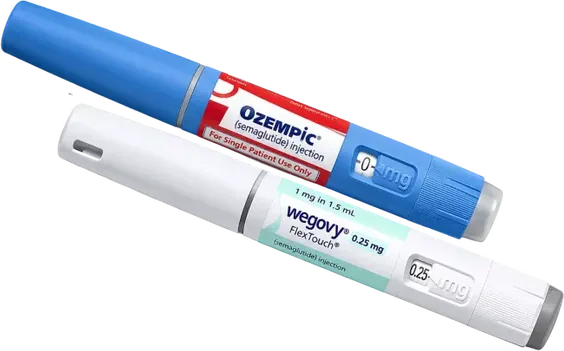
The active ingredient is the same, but the product, approval and routine differ. This quick map can help you go into your visit with the right questions.
Starting doses are deliberately small. With the weekly Wegovy injection, the label calls for 0.25 mg for four weeks, then steps of 0.5 mg, 1 mg and 1.7 mg before the usual 2.4 mg maintenance dose. Daily tablets follow a similar staircase in 30-day steps.
The point is tolerance, not speed. Nausea and stomach upset are most common in the weeks after a dose increase. If a step feels rough, your clinician can keep you at that dose longer instead of pushing ahead.
Because you may eat much less, food quality matters more. Build meals around protein, vegetables and enough fluids, and stop eating when you feel satisfied rather than full. Strength training a few times a week helps protect muscle while you lose weight.
Greasy, very sweet or very large meals tend to bring on nausea. Many people find smaller plates and slower eating make the first months much easier.
Semaglutide carries a boxed warning about thyroid C-cell tumors, which were seen in rodents. It is not known whether this happens in people. Your clinician screens for the conditions below and explains what to report.
Independently licensed U.S. physicians supervise every treatment we offer.
Board-certified in anesthesiology, he reads medications and metabolism with a pharmacologist's eye, which shapes how he doses weight loss and longevity care.

Trained at Columbia and Washington University, he pairs prescriptions with practical habits around food, training and sleep.

An OB-GYN for more than 40 years and a Fellow of ACOG, she leads women's health care, from perimenopause to PCOS.
See how care, shipping and license checks work where you live. Tap your state to start.
Still deciding? The first consultation is free and takes about 5–10 minutes.
Book a free consultationSemaglutide is the active ingredient; Ozempic and Wegovy are brand-name products that contain it. They differ in approved uses, dose ranges and the devices or tablets they come in. Compounded semaglutide uses the same ingredient name but is not an FDA-approved product.
That depends on your goals, your health history, whether you have type 2 diabetes, how you feel about injections and what you can afford. Your clinician walks through the options during the visit. Brand medications may cost extra beyond the program price.
Weight-reduction use is generally for adults with a BMI of 30 or more, or 27 or more with at least one weight-related condition. BMI is a starting point, not the whole picture. Your clinician also looks at your conditions, medicines and past treatments.
Some people notice less hunger within the first couple of weeks, though early doses are mainly for tolerance. Weight change usually becomes clearer over the following months as the dose rises. Results vary from person to person.
Jumping straight to a high dose makes nausea, vomiting and diarrhea much more likely. Stepping up every few weeks lets your digestive system adjust. Your clinician may slow the climb if you need more time.
Prediabetes counts as a weight-related condition, so it can make you eligible at a BMI of 27 or more. Semaglutide can lower blood sugar as well as weight. Your clinician may suggest lab work to track both.
Any meaningful weight loss includes some lean tissue, not only fat. Eating enough protein and doing regular strength exercise can help limit muscle loss. Your clinician can give you practical targets.
There is no outright ban, but alcohol can add to nausea and to low blood sugar if you also take diabetes medicines. Many people find they want less of it. Keep it light and talk with your clinician if you drink regularly.
Appetite usually comes back after stopping, and many people regain weight over the following months. Some stay on a maintenance dose long term, while others taper with a firm plan for eating and exercise. Your clinician helps you choose.
Semaglutide slows stomach emptying, which matters for anesthesia. Tell your surgeon and anesthesia team that you take it well before the procedure. They will tell you whether to pause a dose.
Yes. Your first consultation is free, and you don't need insurance to book. If semaglutide is prescribed, your clinician confirms the cost before anything is sent to the pharmacy.
Semaglutide acts on the GLP-1 receptor only. Tirzepatide, sold as Zepbound and Mounjaro, acts on both GLP-1 and GIP receptors. Your clinician can compare the two based on your history and how you respond.
No. Semaglutide products should not be combined with each other or with other GLP-1 receptor agonists. If you are switching from another GLP-1, your clinician plans the timing.
Book a free 5–10 minute phone or video visit. If a licensed U.S. clinician decides semaglutide is right for you, treatment starts at $149 a month with follow-up included.
Medically reviewed October 2026. This page is general information and not a substitute for advice from your own clinician. Read our editorial policy.