
Dr. Benjamin H. Krasne, M.D.
Board-certified physicianBoard-certified in anesthesiology, he reads medications and metabolism with a pharmacologist's eye, which shapes how he doses weight loss and longevity care.

Weight loss
GLP-1 shots, daily pills and non-GLP-1 options, prescribed after a free visit.
Start here
Brand-name injections
Pills and other options
Tap your state
State rules change what we can offer and how fast. Pick yours.
ESA and PSD letters, semaglutide, tirzepatide and medical card pages for every state we serve.
Popular ESA cities
Mobile IV in California
Weekly semaglutide for type 2 diabetes
Ozempic is a once-weekly semaglutide injection approved to lower blood sugar in adults with type 2 diabetes, with added heart and kidney protection for some. Weight loss is a common side benefit, not its approved purpose.
Free to book. You pay only if you go ahead with treatment.
Your clinician reviews your A1C, medicines and complications before prescribing, including heart or kidney disease that may shape your plan.
You start at 0.25 mg weekly and move up only as needed, to 0.5 mg, then 1 mg and 2 mg, at least four weeks apart.
If you take insulin or a sulfonylurea, you get guidance on adjusting those doses to lower your risk of low blood sugar.
Share a few glucose readings and notes at check-ins, and your clinician decides whether to raise the dose, hold or adjust another medicine.
Choose phone or video and have your latest A1C, diabetes medicines and any kidney or eye history ready.
A licensed U.S. clinician reviews your diabetes control and other conditions in about 5–10 minutes and decides whether Ozempic is appropriate.
If prescribed, a licensed U.S. pharmacy fills your pen. The first four weeks are a low starter dose to help your stomach adjust.
Your clinician moves you to 0.5 mg and may later raise to 1 mg or 2 mg, guided by blood sugar results and side effects.
A1C is usually rechecked after a few months, and other diabetes medicines may be adjusted to avoid lows.
Ozempic is often added when your A1C is still high on metformin or other medicines.
Ozempic is approved to lower the risk of major cardiovascular events in this group.
Ozempic is approved to reduce the risk of kidney function decline, kidney failure and cardiovascular death.
One injection a week can be easier to keep up with than several daily pills.
Children, people with type 1 diabetes, anyone who is pregnant and anyone with medullary thyroid cancer (yours or a family member's) or MEN 2.
| Feature | Ozempic | Wegovy | Mounjaro |
|---|---|---|---|
| Active ingredient | Semaglutide | Semaglutide | Tirzepatide |
| FDA-approved for | Type 2 diabetes in adults | Weight management | Type 2 diabetes |
| How it's taken | Weekly injection | Weekly injection | Weekly injection |
| Plans from | $149/mo | $199/mo | $299/mo |
In type 2 diabetes, the body does not respond well to insulin, and the liver keeps releasing sugar even when blood levels are already high. Ozempic contains semaglutide, which prompts the pancreas to release insulin when glucose is raised, lowers glucagon so the liver releases less sugar and slows digestion so post-meal spikes are smaller.
The FDA approves Ozempic injection for three purposes in adults with type 2 diabetes: improving blood sugar control alongside diet and exercise; lowering the risk of heart attack, stroke and cardiovascular death in those with established heart disease; and lowering the risk of worsening kidney function, kidney failure and cardiovascular death in those with chronic kidney disease.
Ozempic is not approved for weight loss on its own. Many people with diabetes do lose weight on it, but if weight is your main goal and you do not have type 2 diabetes, your clinician will usually point you toward a product approved for weight management, such as Wegovy or Zepbound.
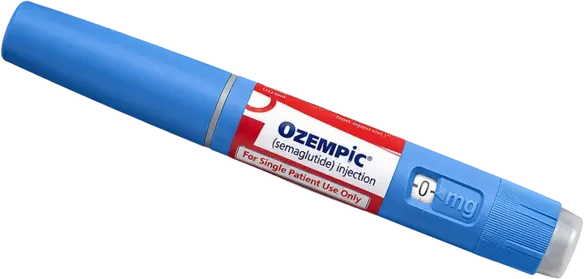
Ozempic pens hold several weekly doses. You attach a new needle each week and dial the dose your clinician prescribes.
Ozempic is often added to metformin. On its own it rarely causes low blood sugar, but the risk rises if you also take insulin or a sulfonylurea such as glipizide or glimepiride. Your clinician may lower those doses when you start and will tell you what blood sugar readings to watch for.
If you have diabetic eye disease, a fast drop in blood sugar can sometimes make it temporarily worse. Keep up with your eye exams and report any change in vision.
A little home data makes each check-in more useful. You do not need elaborate logs; a few numbers and notes are enough for your clinician to decide whether to raise the dose, hold or change another medicine.
Ozempic has a boxed warning about thyroid C-cell tumors seen in rodent studies. Your clinician reviews these points before you start and as your dose changes.
Independently licensed U.S. physicians supervise every treatment we offer.
Board-certified in anesthesiology, he reads medications and metabolism with a pharmacologist's eye, which shapes how he doses weight loss and longevity care.

Trained at Columbia and Washington University, he pairs prescriptions with practical habits around food, training and sleep.

An OB-GYN for more than 40 years and a Fellow of ACOG, she leads women's health care, from perimenopause to PCOS.
Still deciding? The first consultation is free and takes about 5–10 minutes.
Book a free consultationNo. Ozempic is approved for adults with type 2 diabetes. Wegovy, which also contains semaglutide, is the version approved for weight management.
Ozempic is approved for type 2 diabetes, so prescribing it without diabetes would be off-label. If weight loss is your goal, your clinician will usually recommend an option approved for that purpose instead.
A recent A1C helps confirm your diagnosis and shows how far from target you are. Kidney function results are also useful, especially if you have chronic kidney disease. Your clinician may order labs if you do not have recent ones.
Ozempic is approved to reduce the risk of sustained decline in kidney function, kidney failure and cardiovascular death in adults with type 2 diabetes and chronic kidney disease. That approval uses a 1 mg maintenance dose.
By itself it seldom does, because it works mainly when glucose is high. The risk rises when it is combined with insulin or a sulfonylurea, so those doses may be lowered.
Yes, Ozempic is often used together with metformin. Your clinician reviews all of your diabetes medicines to make sure the combination is right for you.
Take it as soon as you can if it is within 5 days of the missed dose. If more than 5 days have passed, skip it and take the next dose on your usual day.
Yes, as long as at least 2 days, or 48 hours, separate the two doses. After that, keep to the new day each week.
The first four weeks at 0.25 mg are mainly for tolerance. Glucose usually starts improving after you move up to 0.5 mg, and A1C is typically rechecked after about three months.
No. Ozempic is approved for type 2 diabetes only, and it is not a substitute for insulin.
Yes. Since May 2026, Novo Nordisk has offered oral semaglutide for type 2 diabetes in the U.S. as Ozempic tablets, which share an FDA label with Rybelsus. They follow a different dosing routine from the weekly injection.
Many plans cover Ozempic for type 2 diabetes, sometimes with prior authorization. You do not need insurance to see our clinicians. Program pricing starts at $149/mo, and brand medication may cost extra.
Semaglutide is long acting, which is why it is taken weekly and why the label advises stopping at least 2 months before a planned pregnancy. Tell any surgeon or anesthesia team that you take it.
Book a free 5–10 minute phone or video visit with a licensed U.S. clinician. Plans start at $149 a month, and brand medication may cost extra.
Medically reviewed October 2026. This page is general information and not a substitute for advice from your own clinician. Read our editorial policy.