
Dr. Benjamin H. Krasne, M.D.
Board-certified physicianBoard-certified in anesthesiology, he reads medications and metabolism with a pharmacologist's eye, which shapes how he doses weight loss and longevity care.

Weight loss
GLP-1 shots, daily pills and non-GLP-1 options, prescribed after a free visit.
Start here
Brand-name injections
Pills and other options
Tap your state
State rules change what we can offer and how fast. Pick yours.
ESA and PSD letters, semaglutide, tirzepatide and medical card pages for every state we serve.
Popular ESA cities
Mobile IV in California
Your core health numbers, checked
One blood draw covers your heart, metabolism, thyroid, hormones and organ function. A licensed U.S. clinician orders the panel and then talks you through what the numbers mean.
Free to book. You pay only if you go ahead with treatment.
A single visit covers lipids, a comprehensive metabolic panel, hemoglobin A1c, fasting insulin, thyroid and hormone markers chosen for your age and sex.
A licensed U.S. clinician writes your lab order during a free 5–10 minute consultation, so you don't need another appointment elsewhere first.
Your clinician reads your results together, not one at a time, and tells you what needs a repeat test, a change or a referral.
Download a copy of your results to share with your own doctor so your regular care has the full picture. Panels start at $175.
Pick a phone or video call when you book. The visit takes about 5–10 minutes, and your clinician confirms which markers make sense for you.
If the panel is appropriate, your clinician sends an electronic order to a patient service center near you, such as Quest or Labcorp. You'll get preparation instructions, including whether to fast.
Visit the lab, give a sample and go about your day. Results are posted to your account when the lab releases them, which can vary by test.
A clinician walks you through each result, flags anything that needs attention and explains options, which may include retesting, treatment or a referral.
If your last labs were years ago, a broad panel gives you a fresh baseline to compare against in the future.
Fatigue, brain fog and changes in weight or mood can have many causes. Blood work helps rule some of them in or out.
Hormone therapy, weight-loss medication and some longevity treatments are safer with baseline results on file.
Repeating the same panel once or twice a year shows trends that a single result cannot.
If you have chest pain, severe shortness of breath, fainting or other emergency symptoms, call 911 instead of ordering labs online.
| Feature | Full lab panel | Annual physical | Biomarker testing |
|---|---|---|---|
| Blood tests | Lipids, CMP, A1c, insulin, thyroid and hormones | Varies by doctor | 50+ markers |
| Physical exam and vaccines | — | Included | — |
| Results review | Phone or video, 5–10 minutes | In person | Phone or video, 5–10 minutes |
| Price | From $175, self-pay | Depends on your insurance | From $199, self-pay |
A full lab panel is a group of blood tests run from the same draw so you and your clinician can see several body systems at once. Ours combines a lipid panel, a comprehensive metabolic panel (CMP), hemoglobin A1c, fasting insulin, thyroid testing and a hormone panel, along with other markers your clinician may add based on your history.
Each test answers a different question. The lipid panel shows cholesterol and triglycerides. The CMP checks blood sugar, electrolytes, kidney and liver function. A1c reflects your average blood sugar over roughly the past two to three months. Thyroid and hormone tests help explain symptoms such as tiredness, weight change or low libido.
Numbers on their own can mislead. Healthy people sometimes land outside a lab's reference range, and a result inside the range is not always the full story. That's why every panel ordered here comes with a short clinician review, where you go over the results together and decide whether anything needs a repeat test, treatment or a visit to your own doctor.
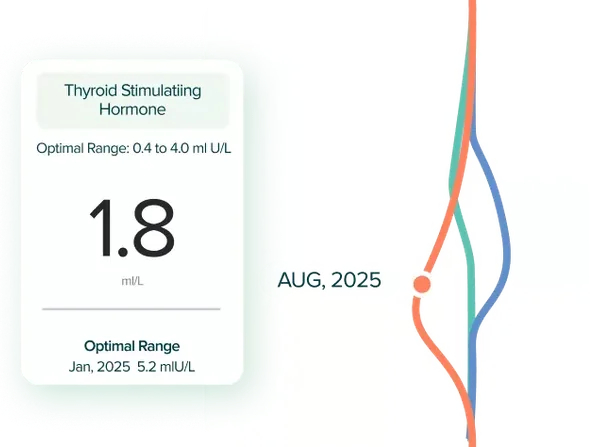
The exact list depends on your age, sex and health history, so your clinician may add or remove items. The core groups are below.
Panels that include glucose, insulin and lipids usually call for an overnight fast, typically 8 to 12 hours. Some tests ask for the longer end of that range; MedlinePlus notes a cholesterol test may call for 9 to 12 hours, so follow the exact window on your lab instructions. Plain water is normally fine and helps the draw go smoothly.
Some supplements can skew results. Biotin, for example, can interfere with certain lab tests, so tell your clinician what you take. Do not stop a prescription medicine before testing unless a clinician tells you to. If hormone testing is included, a morning draw may be recommended because some hormones, such as testosterone, are usually highest early in the day.
Reference ranges are built from large groups of healthy people, and each lab sets its own. A value flagged high or low may be normal variation for you, a sign of something worth watching or a reason to repeat the test. Your clinician looks at results together rather than one at a time.
Some results need confirmation before anyone draws a conclusion. An A1c in the prediabetes or diabetes range, for example, is often confirmed with a second test such as fasting glucose. A lab panel can point toward a problem, but it isn't a diagnosis by itself.
A blood draw is low risk, and a panel is a screening tool, not a substitute for an exam or for ongoing care with your own doctor.
Independently licensed U.S. physicians supervise every treatment we offer.
Board-certified in anesthesiology, he reads medications and metabolism with a pharmacologist's eye, which shapes how he doses weight loss and longevity care.

Trained at Columbia and Washington University, he pairs prescriptions with practical habits around food, training and sleep.

An OB-GYN for more than 40 years and a Fellow of ACOG, she leads women's health care, from perimenopause to PCOS.
Still deciding? The first consultation is free and takes about 5–10 minutes.
Book a free consultationThe panel includes a lipid panel, a comprehensive metabolic panel, hemoglobin A1c, fasting insulin, thyroid testing and a hormone panel. Your clinician may add other markers based on your history and symptoms. You'll see the final list on your lab order.
Full lab tests start at $175. You pay directly, so no insurance is needed. The first consultation is free, and the results review is part of the service.
Usually, yes. Glucose, insulin and lipid results are most accurate after an overnight fast, often 8 to 12 hours. Your instructions will tell you exactly what to do, and drinking water is generally allowed.
Your order is sent electronically to a patient service center near you, such as a Quest or Labcorp location. Many locations accept walk-ins, but booking a time can shorten your wait.
Most routine blood tests come back within a few days, but timing varies by test and lab. You're notified when results post, and you can then review them with a clinician.
Not on its own. Lab results can suggest a problem, but a diagnosis usually needs your symptoms, history, an exam and sometimes repeat or additional tests. Your clinician will tell you if a result needs confirmation.
Your clinician explains what the result could mean and what to do next. That may be a repeat test, lifestyle changes, a prescription if appropriate or a referral to your primary care doctor or a specialist.
No. A physical includes an exam, blood pressure, vaccines and age-based screenings that a blood test cannot replace. Many people use a full panel alongside their regular checkups.
A licensed clinician writes the order for you during your consultation, so you don't need a separate appointment elsewhere. The clinician decides whether testing is appropriate.
Yes. You can download your results and share them with any clinician you see. Sharing them helps your regular doctor keep a complete picture of your health.
Many people repeat a broad panel once a year. If you're working on a specific number, such as A1c or cholesterol, your clinician may suggest checking that marker more often.
This is a self-pay service, so we don't bill insurance. Some individual tests may be covered if your own doctor orders them through your plan, so you can compare both options.
In most cases, yes, unless a clinician tells you otherwise. Tell your clinician about all medicines and supplements, especially biotin, which can affect some lab results.
Book a free phone or video visit, get your lab order sent to a nearby patient service center and review your results with a licensed clinician. Panels start at $175.
Medically reviewed October 2026. This page is general information and not a substitute for advice from your own clinician. Read our editorial policy.