
Dr. Benjamin H. Krasne, M.D.
Board-certified physicianBoard-certified in anesthesiology, he reads medications and metabolism with a pharmacologist's eye, which shapes how he doses weight loss and longevity care.

Weight loss
GLP-1 shots, daily pills and non-GLP-1 options, prescribed after a free visit.
Start here
Brand-name injections
Pills and other options
Tap your state
State rules change what we can offer and how fast. Pick yours.
ESA and PSD letters, semaglutide, tirzepatide and medical card pages for every state we serve.
Popular ESA cities
Mobile IV in California
Oxytocin spray for closeness
Oxytocin is a hormone your body releases during touch, closeness and orgasm. A licensed clinician can tell you whether a compounded nasal spray is a reasonable thing to try, with honest expectations. The price is $115.
Free to book. You pay only if you go ahead with treatment.
Your clinician explains that research is mixed, that many people notice nothing obvious and that oxytocin won't create feelings that aren't already there.
A licensed clinician reviews your medicines, pregnancy status and medical history before deciding whether a compounded spray is reasonable to try.
You get a set amount per use and a clear daily cap, since long-term safety of frequent or high-dose use hasn't been well studied.
Step-by-step instructions show you how to aim and time each spray, plus how to store a heat-sensitive compounded peptide.
Select phone or video when you book. The first visit costs nothing, and insurance isn't required.
In about 5–10 minutes, a licensed clinician asks what you hope oxytocin will help with, your medicines, pregnancy status and any heart, kidney or sodium issues.
If appropriate, your clinician prescribes a starting dose per spray session and explains how to use it, with a firm daily maximum.
After a few uses, tell the care team what you noticed. Your clinician can adjust the dose or advise stopping if it is not helpful.
You and your partner want to explore whether oxytocin adds to emotional connection during sex, alongside good communication.
Some clinicians consider oxytocin as an add-on to counseling. It supports that work; it does not replace it.
Oxytocin is sometimes used next to treatments for erections or desire, under one clinician's oversight.
Oxytocin can cause uterine contractions. Do not use it if you are pregnant or could be pregnant unless an obstetric clinician directs it.
Large doses of oxytocin can cause water retention and low sodium. Tell your clinician about heart rhythm problems, kidney disease or low sodium in the past.
| Feature | Oxytocin nasal spray | PT-141 |
|---|---|---|
| Main focus | Closeness and emotional connection | Sexual desire |
| Form here | Compounded nasal spray | Troches |
| FDA status of this form | Not FDA-approved | Injectable form FDA-approved for some women |
| Evidence | Limited and mixed | Injectable form studied for low desire |
| Price | $115 | $149 |
Oxytocin is a small peptide hormone made in the hypothalamus and released by the pituitary gland. In the body, it triggers contractions during labor and milk release during breastfeeding. In the brain, it is involved in social bonding, trust and the sense of closeness that comes with touch and sex. Levels rise naturally around orgasm.
The FDA-approved forms of oxytocin are injections used in hospitals to start or strengthen labor and to control bleeding after birth. The nasal spray offered here is made by a licensed U.S. compounding pharmacy and is not FDA-approved. Using it for intimacy, connection or social comfort is off-label, and the research behind those uses is still developing.
Studies of intranasal oxytocin show mixed results. Some people describe feeling a little calmer, warmer or more present with a partner; many notice nothing obvious. It does not create attraction or feelings that are not already there. If you approach it as a modest, optional tool rather than a fix, you are more likely to judge it fairly.
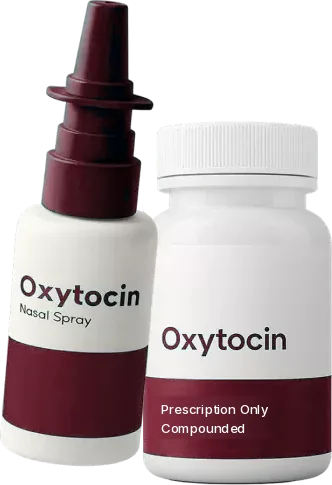
Gently blow your nose first. Tilt your head slightly forward, place the tip just inside one nostril, aim toward the outer side of the nose rather than the middle and spray while breathing in gently. Alternate nostrils if your dose uses more than one spray. Most people time a dose a short while before the situation they want it for.
Your clinician will set the amount per use and a firm daily limit. Do not go above it. Many people use oxytocin occasionally rather than every day. Keep the bottle stored as the pharmacy label directs, as compounded peptide sprays can be sensitive to heat.
Most studies of intranasal oxytocin have been small and short. They point to these general themes, with plenty of uncertainty:
PT-141 (bremelanotide) acts on brain receptors tied to sexual desire, and an injectable form is FDA-approved for low desire in some women. Oxytocin is aimed more at closeness and emotional connection, and its evidence is weaker. Some people use one, some use both. The Triple Action Blend combines a small dose of oxytocin with tadalafil and PT-141 in one tablet for men.
Short-term intranasal oxytocin is usually well tolerated in research settings, but it is still a hormone and needs a prescription and sensible limits.
Independently licensed U.S. physicians supervise every treatment we offer.
Board-certified in anesthesiology, he reads medications and metabolism with a pharmacologist's eye, which shapes how he doses weight loss and longevity care.

Trained at Columbia and Washington University, he pairs prescriptions with practical habits around food, training and sleep.

An OB-GYN for more than 40 years and a Fellow of ACOG, she leads women's health care, from perimenopause to PCOS.
Still deciding? The first consultation is free and takes about 5–10 minutes.
Book a free consultationNo. FDA-approved oxytocin is an injection used in labor and after childbirth. The nasal spray is compounded by a licensed U.S. pharmacy and is not FDA-approved, and its use for intimacy or connection is off-label.
Oxytocin nasal spray is $115. The first visit costs nothing, and insurance isn't required.
There is no FDA-approved dose for oxytocin nasal spray, so your clinician sets both the amount per use and a firm daily limit based on your health and goals. Don't go above either one.
Many people notice nothing dramatic. Some describe feeling slightly calmer, warmer or more emotionally present. It does not produce a high and does not create feelings that are not there.
If you notice an effect, it usually comes within a short time after spraying and fades within a few hours. Your clinician will suggest when to use it relative to the moment you want it for.
Each person needs their own consultation and prescription. Sharing a prescribed medicine is not safe or legal.
Evidence for sexual desire specifically is limited. If low desire is your main concern, ask your clinician about PT-141 or about checking for causes such as hormones, medicines or mood.
Serious interactions with common antidepressants are not well known, but your clinician will still review every medicine you take before prescribing.
Yes, if they are not pregnant and the clinician finds it appropriate. Pregnancy must be ruled out because oxytocin can cause contractions.
Oxytocin plays a natural role in milk release. If you are breastfeeding, discuss it with your clinician before using any added oxytocin.
Products sold online as oxytocin without a prescription are not regulated as medicines and may not contain what they claim. A prescription from a licensed clinician and a licensed pharmacy is the safer route.
Too much oxytocin can lead to fluid retention and low sodium, which may cause headache, nausea, confusion or, rarely, seizures. Stay within the dose and daily limit your clinician prescribes.
It depends on your prescribed dose and how often you use it. Check the pharmacy label for the beyond-use date, and do not use the spray after that date.
Book a free 5–10 minute phone or video consultation. If a licensed clinician decides it is reasonable, compounded oxytocin nasal spray costs $115. Compounded medicines are not FDA-approved.
Medically reviewed October 2026. This page is general information and not a substitute for advice from your own clinician. Read our editorial policy.