
Dr. Benjamin H. Krasne, M.D.
Board-certified physicianBoard-certified in anesthesiology, he reads medications and metabolism with a pharmacologist's eye, which shapes how he doses weight loss and longevity care.

Weight loss
GLP-1 shots, daily pills and non-GLP-1 options, prescribed after a free visit.
Start here
Brand-name injections
Pills and other options
Tap your state
State rules change what we can offer and how fast. Pick yours.
ESA and PSD letters, semaglutide, tirzepatide and medical card pages for every state we serve.
Popular ESA cities
Mobile IV in California
Weekly B12 shots, prescribed online
If your B12 is low or your body struggles to absorb it, a licensed clinician can prescribe B12 shots you give yourself at home, usually once a week. The subscription is $85 a month.
Free to book. You pay only if you go ahead with treatment.
Your clinician prescribes B12 you inject at home, usually 0.25 mL once a week, so you aren't driving to an office for every shot.
The subscription is $85 a month for your prescribed B12, and the first consultation is free. You don't need insurance to get started.
You get step-by-step instructions for home injections and sharps disposal, plus ongoing messaging with the care team whenever questions come up.
A licensed clinician follows up to review your dose and how you feel, and explains whether shots, pills or another form fits you best.
Choose a time online. Your first visit costs nothing, and insurance isn't required.
In a 5–10 minute phone or video consultation, the clinician asks about your symptoms, diet, medicines and any recent lab results, and may order blood work.
If B12 shots are right for you, your clinician sends a prescription to a licensed U.S. pharmacy and the medication is shipped to you.
The care team explains how to draw up the dose, where to inject and how to dispose of sharps. Most people inject 0.25 mL once a week.
Your subscription continues month to month. Message the care team with questions, and your clinician can adjust your plan or repeat labs as needed.
A low or borderline result, especially with symptoms, is the most common reason to start. Your clinician may order labs if you don't have recent results.
B12 is found naturally almost only in animal foods, so people who avoid them are at higher risk of running low without supplements or fortified foods.
Metformin, proton pump inhibitors such as omeprazole, and H2 blockers can lower how much B12 you absorb from food over time.
Pernicious anemia, atrophic gastritis, celiac or Crohn's disease, weight-loss surgery and other stomach or bowel operations can all reduce B12 absorption. Older adults are also at higher risk.
People allergic to cobalt or cobalamin, or with Leber's hereditary optic neuropathy, should not start B12 shots without specialist advice. B12 is not a weight-loss treatment.
| Option | Cyanocobalamin shot | Methylcobalamin shot | Oral B12 |
|---|---|---|---|
| Form | Injection at home | Injection at home | Tablet by mouth |
| FDA status | FDA-approved | Compounded, not FDA-approved | Over-the-counter supplement |
| Prescription needed | Yes | Yes | No |
| Often suits | Absorption problems or very low levels | People who prefer this form | Low B12 from diet alone |
Vitamin B12 helps your body make red blood cells and DNA and keeps your nerves working properly. Your body can't make it, so it has to come from food, mainly meat, fish, eggs and dairy, or from fortified foods and supplements. To absorb B12 from food, you need enough stomach acid and a protein made in the stomach called intrinsic factor.
When that system doesn't work well, B12 levels can fall even if you eat plenty of it. A shot sidesteps the gut, putting B12 into muscle or the tissue under the skin so it doesn't depend on stomach absorption. According to MedlinePlus, people whose deficiency comes from a health condition often get B12 shots, and some need them long term.
Low B12 can develop slowly. Symptoms such as tiredness, pale skin, numbness or tingling, balance problems, memory trouble or low mood can take years to show up, and nerve damage may become permanent if treatment is delayed. That's why a clinician looks at your history, symptoms and, often, blood tests before prescribing.
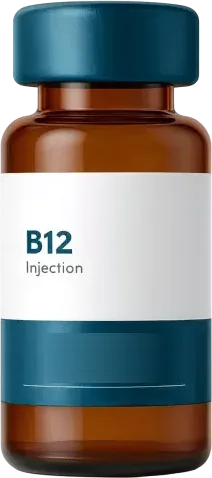
The usual home plan is 0.25 mL injected once a week, either into a muscle or just under the skin, depending on what your clinician prescribes. Some people with very low levels need more frequent doses at first, which your clinician will tell you about. Rotating injection sites helps keep each spot comfortable.
How quickly people notice a difference varies. Some feel more energetic within a few weeks; nerve symptoms such as tingling can take longer to improve, and may not fully reverse if the deficiency lasted a long time. If your levels were low because of an absorption problem, you may need shots indefinitely.
Cyanocobalamin is the FDA-approved injectable form used to treat B12 deficiency. Methylcobalamin is another form that many people ask for. Injectable methylcobalamin comes from licensed U.S. compounding pharmacies and is not FDA-approved; the FDA does not review compounded products for safety or effectiveness before they're sold.
The NIH Office of Dietary Supplements notes that research hasn't shown any one form of B12 to be better than the others. Your clinician will explain which form your prescription uses and why.
Not everyone needs injections. If your B12 is low simply because of diet, high-dose oral supplements may be enough, and MedlinePlus notes that some people do well on them. A prescription nasal form also exists.
Shots make the most sense when absorption from the gut is the problem, when levels are very low or symptoms are significant, or when pills haven't worked. Your clinician can talk through the options during your consultation.
The NIH Office of Dietary Supplements says vitamin B12 has not been shown to cause harm even at high doses. Injections still carry some risks, and your clinician reviews your history first.
Independently licensed U.S. physicians supervise every treatment we offer.
Board-certified in anesthesiology, he reads medications and metabolism with a pharmacologist's eye, which shapes how he doses weight loss and longevity care.

Trained at Columbia and Washington University, he pairs prescriptions with practical habits around food, training and sleep.

An OB-GYN for more than 40 years and a Fellow of ACOG, she leads women's health care, from perimenopause to PCOS.
Still deciding? The first consultation is free and takes about 5–10 minutes.
Book a free consultationB12 injections are $85 a month as a subscription. Your first consultation is free, you don't need insurance, and the price is confirmed before anything is prescribed.
Most people inject 0.25 mL once a week. Your clinician may recommend a different schedule if your levels are very low or once they've recovered.
Yes, this is a home program. The care team walks you through drawing up the dose, choosing a site and disposing of the needle, and most people find it quick after the first few times.
Often, yes. Your clinician may ask for recent results or order tests such as a B12 level and a blood count to confirm a deficiency and rule out other causes of your symptoms.
Tiredness, weakness, pale skin, a sore tongue, numbness or tingling in the hands and feet, balance problems, low mood and memory trouble are common. Many people have mild or no symptoms at first.
If your low level is from diet alone, high-dose pills may work. If your body has trouble absorbing B12, shots are usually more reliable. Your clinician will help you decide.
No. B12 doesn't cause weight loss. Correcting a deficiency can help with tiredness, which may make it easier to stay active, but it isn't a weight-loss treatment.
It can. Metformin may reduce B12 absorption over time, as can acid-reducing medicines like proton pump inhibitors. If you take these, ask your clinician whether checking your level makes sense.
Research hasn't shown that one form works better. Cyanocobalamin injection is FDA-approved; injectable methylcobalamin is compounded and not FDA-approved. Your clinician will explain which you're prescribed.
The NIH says B12 hasn't been shown to cause harm even at high doses. Still, follow your prescribed schedule and tell your clinician about any side effects.
It depends on the cause. People with pernicious anemia or past stomach surgery often need lifelong treatment. If your deficiency was from diet, you may be able to switch to oral B12 later.
Your plan renews monthly. Contact the care team if you want to pause or stop, and let your clinician know so they can advise on next steps for your B12 levels.
Yes. A licensed clinician evaluates you first, and a prescription is written only when treatment is appropriate. The medication is filled by a licensed U.S. pharmacy.
Book a free 5–10 minute phone or video visit. If B12 shots are right for you, your clinician prescribes them for $85 a month, with step-by-step home injection guidance.
Medically reviewed October 2026. This page is general information and not a substitute for advice from your own clinician. Read our editorial policy.