
Dr. Benjamin H. Krasne, M.D.
Board-certified physicianBoard-certified in anesthesiology, he reads medications and metabolism with a pharmacologist's eye, which shapes how he doses weight loss and longevity care.

Weight loss
GLP-1 shots, daily pills and non-GLP-1 options, prescribed after a free visit.
Start here
Brand-name injections
Pills and other options
Tap your state
State rules change what we can offer and how fast. Pick yours.
ESA and PSD letters, semaglutide, tirzepatide and medical card pages for every state we serve.
Popular ESA cities
Mobile IV in California
Glutathione shots you give at home
Glutathione is an antioxidant your body makes on its own. A licensed clinician can prescribe compounded glutathione injections for home use if they think it is reasonable for you, and will be clear about how limited the evidence is.
Free to book. You pay only if you go ahead with treatment.
Your clinician is clear that research on supplemental glutathione is limited and that no form of it has been shown to slow aging.
A licensed U.S. clinician reviews your health, allergies and medications before deciding whether glutathione injections are reasonable for you.
If prescribed, you receive compounded glutathione, syringes, written injection instructions and guidance on safe sharps disposal.
Your clinician sets a modest starting dose and revisits the plan at follow-up instead of keeping you on it indefinitely by default.
Choose phone or video. A licensed clinician spends about 5–10 minutes on your goals, history, allergies and medications.
Your clinician explains what glutathione may and may not do, and may suggest labs first if you have symptoms such as fatigue or abnormal liver tests.
If your clinician decides it is appropriate, a licensed U.S. compounding pharmacy prepares the glutathione and ships it with syringes and instructions.
Your care team covers technique and sharps disposal. At follow-up, your clinician reviews side effects and whether to continue, adjust or stop.
People who already focus on sleep, nutrition, exercise and standard health checks sometimes want to try glutathione as an extra.
Doses are given with a small needle, usually under the skin or into a muscle. Your care team explains the technique.
You should be comfortable trying a treatment whose benefits are not established, and stopping if it does not help.
We do not prescribe glutathione to lighten skin. A 2025 research review found the evidence weak for injected or IV use for this purpose and noted serious reported side effects.
Safety of supplemental glutathione has not been established in pregnancy or breastfeeding, so it is not prescribed in those situations.
| Feature | Injection at home | Oral supplement | IV drip |
|---|---|---|---|
| How it's given | Under the skin or into a muscle | Swallowed | Into a vein by a nurse |
| Absorption | Bypasses digestion | Partly broken down in digestion | Bypasses digestion |
| Prescription needed | Yes | No | Yes |
| Evidence | Limited | Limited and mixed | Limited; poor for skin lightening |
Glutathione is a small molecule built from three amino acids: glutamate, cysteine and glycine. Your cells make it constantly. It helps neutralize reactive molecules that can damage cells, supports the liver in processing many drugs and toxins and helps recycle other antioxidants such as vitamins C and E.
Because glutathione plays these roles, people have tried to raise it with supplements, IV drips and injections, hoping to support healthy aging, recovery or skin appearance. Oral glutathione is partly broken down during digestion, which is one reason some people turn to injections. Research on any route is limited, and no form of supplemental glutathione has been shown to slow aging.
The glutathione we prescribe comes from licensed U.S. compounding pharmacies. Compounded drugs are not FDA-approved, which means the FDA does not check their safety, effectiveness or quality before they are sold.
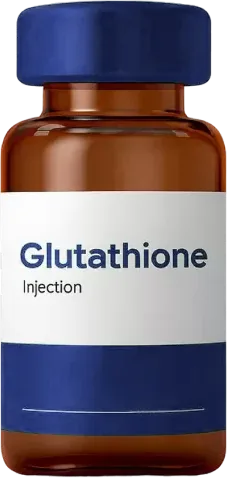
Glutathione can be injected under the skin or into a muscle. Your clinician decides which suits your prescription and starts with a modest dose. Doses commonly fall somewhere between 200 and 600 mg, one to three times a week, and many people use the lower end of that range.
Some people use glutathione for a set number of weeks and then take a break, while others continue at a low frequency. Your clinician will set a schedule and review it at follow-up rather than keeping you on it indefinitely by default.
Glutathione is widely marketed for skin lightening, especially as IV drips. A 2025 narrative review found mixed results for oral glutathione, some support for topical use on dark patches, and poor evidence for IV glutathione. In one IV trial, about a third of participants had adverse events, including liver problems, and the review described a case of severe allergic reaction.
Given that picture, we do not prescribe glutathione for skin lightening. If uneven skin tone or dark spots concern you, ask about treatments with stronger evidence, such as prescription tretinoin.
Glutathione is a natural part of body chemistry, but injecting it from outside is different from what your body makes. Side effects are usually mild, though allergic reactions and liver problems have been reported, mostly with high-dose IV use.
Independently licensed U.S. physicians supervise every treatment we offer.
Board-certified in anesthesiology, he reads medications and metabolism with a pharmacologist's eye, which shapes how he doses weight loss and longevity care.

Trained at Columbia and Washington University, he pairs prescriptions with practical habits around food, training and sleep.

An OB-GYN for more than 40 years and a Fellow of ACOG, she leads women's health care, from perimenopause to PCOS.
Still deciding? The first consultation is free and takes about 5–10 minutes.
Book a free consultationNo. The glutathione injections we prescribe are compounded by licensed U.S. pharmacies and are not FDA-approved. The FDA does not review compounded drugs for safety, effectiveness or quality before sale.
Glutathione injections are $99 per month. Your first consultation is free, insurance is not needed and your clinician confirms costs before prescribing.
It is an antioxidant your cells make to neutralize reactive molecules, support liver processing of drugs and toxins and recycle other antioxidants. Whether extra glutathione improves health in people who are otherwise well is not proven.
Oral glutathione is partly broken down in the gut, so less may reach the bloodstream. Injections bypass digestion, though there is still little evidence that either route improves health outcomes.
We do not prescribe it for that purpose. Research shows weak evidence for injected or IV glutathione for skin lightening, along with reports of liver problems and allergic reactions.
Commonly one to three times a week, with doses usually between 200 and 600 mg. Your clinician sets your dose and schedule and reviews it at follow-up.
Yes. Your care team explains how to prepare a dose, where to inject and how to dispose of needles safely. You can ask questions before your first injection.
Injection-site soreness or redness is the most common. Allergic reactions are rare but serious, so seek urgent care for hives, swelling or trouble breathing.
Glutathione is involved in normal liver function, but injections are not a treatment for liver disease. If you have abnormal liver tests, your clinician will look for the cause and may refer you for appropriate care.
Often, yes. Glutathione has few known drug interactions, but your clinician reviews all your medicines and supplements before adding it.
IV drips give a larger dose into a vein over a short time in a clinic. Home injections are smaller doses under the skin or into muscle. Neither has strong evidence for anti-aging benefits.
There is no set length. Some people use it for a defined period and stop, while others continue at a low frequency. Your clinician revisits the plan at each follow-up.
People who are pregnant or breastfeeding, anyone with a known allergy to glutathione and people seeking it for skin lightening. Those with asthma should discuss it carefully with their clinician.
Book a free 5–10 minute phone or video consultation. If a clinician prescribes it, compounded glutathione with supplies costs $99 a month. Compounded drugs are not FDA-approved.
Medically reviewed October 2026. This page is general information and not a substitute for advice from your own clinician. Read our editorial policy.