
Dr. Benjamin H. Krasne, M.D.
Board-certified physicianBoard-certified in anesthesiology, he reads medications and metabolism with a pharmacologist's eye, which shapes how he doses weight loss and longevity care.

Weight loss
GLP-1 shots, daily pills and non-GLP-1 options, prescribed after a free visit.
Start here
Brand-name injections
Pills and other options
Tap your state
State rules change what we can offer and how fast. Pick yours.
ESA and PSD letters, semaglutide, tirzepatide and medical card pages for every state we serve.
Popular ESA cities
Mobile IV in California
Needle-free NAD+, prescribed online
If you want to try NAD+ but would rather avoid injections, a compounded nasal spray is a simpler daily routine. A licensed clinician first checks whether it makes sense for you.
Free to book. You pay only if you go ahead with treatment.
A compounded nasal spray gives you a daily NAD+ routine that takes seconds, without the injections some people would rather avoid.
A licensed U.S. clinician reviews your history and medications and may suggest checking for anemia or thyroid problems before prescribing.
You get written directions for priming, dosing and storage, plus a follow-up to review how you feel and any side effects.
Research on nasal NAD+ is limited. Your clinician helps you track energy, focus and sleep, and stopping is reasonable if nothing changes.
Choose phone or video. A licensed clinician spends about 5–10 minutes on your goals, history and current medicines.
Your clinician explains what is and isn't known about NAD+ and may suggest labs if you mainly want help with tiredness.
If your clinician decides it's appropriate, a licensed U.S. compounding pharmacy prepares the spray and ships it with directions.
After a few weeks of regular use, your clinician reviews how you feel and any side effects, then continues, adjusts or stops treatment.
A spray takes seconds and needs no syringes, swabs or sharps disposal.
Some people prefer to start with a lower-commitment format to see whether they notice anything before considering other options.
A small spray bottle is easier to carry than vials and syringes. Keep it in its labeled pharmacy packaging.
Ongoing congestion, nasal polyps or frequent sinus infections can make sprays uncomfortable and may affect how much medicine you absorb.
Safety hasn't been studied in pregnancy or breastfeeding. During active cancer treatment, NAD+ is only considered with your oncologist's agreement.
| Feature | NAD+ nasal spray | NAD+ injections | Oral precursors |
|---|---|---|---|
| Needles | No | Yes | No |
| How often | Daily | A few times a week | — |
| Amount per dose | Smaller | Larger | — |
| Regulatory status | Compounded, not FDA-approved | Compounded, not FDA-approved | Supplements, not FDA-reviewed for effectiveness |
| Human research | Little published data | Unproven benefit | Most data of the three |
NAD+ (nicotinamide adenine dinucleotide) is a coenzyme that cells use to produce energy and to power enzymes involved in DNA repair. Research suggests levels tend to decline with age in some tissues, which is why it has become a focus of aging research.
A nasal spray delivers NAD+ to the lining of the nose, which has a rich blood supply. Many medicines use this route because it avoids the digestive tract. How much NAD+ from a spray actually reaches the bloodstream or brain hasn't been well measured in people, so treat claims about absorption with caution.
Our NAD+ spray comes from licensed U.S. compounding pharmacies. Compounded drugs are not FDA-approved, and the FDA does not check them for safety, effectiveness or quality before they're sold. Human evidence that NAD+ in any form slows aging is limited, and reviews describe long-term trials as still early.
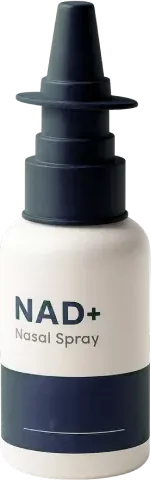
A common starting schedule is one to two sprays in each nostril once or twice a day, usually in the morning, with any second dose earlier in the day, since some people find NAD+ mildly energizing. Your clinician will give you a specific dose on your prescription.
Before first use, prime the pump as the pharmacy instructions describe. Blow your nose gently, tilt your head slightly forward, insert the tip, spray while breathing in gently through the nose and avoid blowing your nose for a few minutes afterward. Store the bottle as the label directs.
Each spray delivers a smaller amount than an injection, so it's generally used daily as a steady routine. Injections give a larger dose a few times a week. Oral precursors such as nicotinamide riboside have the most human study data of the three, though they are sold as supplements and not reviewed by the FDA for effectiveness.
None of these has been shown to slow aging in people. If you try the spray for several weeks and notice no benefit, it's reasonable to stop.
Because the effects people describe are subjective, it helps to decide in advance what you're watching for. Before you start, jot down how your energy, focus and sleep feel on a typical week. Use the spray consistently for several weeks without changing other parts of your routine at the same time, then compare.
Share those notes at your follow-up. If you feel better, your clinician can continue the prescription. If nothing has changed, stopping saves you money and avoids taking a product you don't need.
Side effects reported with NAD+ nasal spray are usually mild and local. Long-term safety data in people are limited, and researchers have raised theoretical questions about boosting NAD+ in some situations, such as existing cancers, that need further study.
Independently licensed U.S. physicians supervise every treatment we offer.
Board-certified in anesthesiology, he reads medications and metabolism with a pharmacologist's eye, which shapes how he doses weight loss and longevity care.

Trained at Columbia and Washington University, he pairs prescriptions with practical habits around food, training and sleep.

An OB-GYN for more than 40 years and a Fellow of ACOG, she leads women's health care, from perimenopause to PCOS.
Still deciding? The first consultation is free and takes about 5–10 minutes.
Book a free consultationNo. It's compounded by licensed U.S. pharmacies and is not FDA-approved for any condition. The FDA does not review compounded drugs for safety, effectiveness or quality before sale.
NAD+ nasal spray is $165 per month. The first consultation is free, insurance isn't needed and your clinician confirms costs before prescribing.
There is little published research on nasal NAD+ in people. Some users report better energy or focus, but that has not been confirmed in controlled trials.
A common schedule is one to two sprays per nostril once or twice a day. Your prescription will list your exact dose, which your clinician may adjust.
Each spray delivers less NAD+ than an injection, which is why sprays are usually used every day. Whether either route gives meaningful health benefits is still unproven.
Most are mild: nasal stinging, sneezing or congestion right after a spray. Headache or flushing is less common. Tell your clinician if anything persists.
A blocked or inflamed nose may absorb less and feel more irritated. Many people pause until the cold clears; ask your clinician what they prefer.
Storage depends on the pharmacy's formulation. Follow the label that comes with your bottle, including how long it lasts once opened.
NAD+ is not known to have the serotonin interaction that methylene blue has. Your clinician still reviews your full medication list before prescribing.
Generally, yes, within the U.S., if you keep it in its labeled pharmacy packaging. Rules for compounded medicines vary abroad, so check before international travel.
People who notice a change often describe it within a few weeks of daily use. Many notice nothing, and your clinician will review whether continuing is worthwhile.
Not always. If low energy is your main reason for asking, your clinician may suggest checking for anemia, thyroid problems or other treatable causes first. Labs are done at a nearby draw site, and costs are confirmed in advance.
Anyone pregnant or breastfeeding, and people in active cancer treatment unless their oncologist agrees. Chronic nasal conditions may also make a spray a poor fit.
Book a free 5–10 minute phone or video visit. If a clinician decides it suits you, compounded NAD+ nasal spray is $165 a month with follow-up included.
Medically reviewed October 2026. This page is general information and not a substitute for advice from your own clinician. Read our editorial policy.